

AI CERTs
6 months ago
Influencer Authenticity Scoring Algorithms Redefine Brand Deals
Marketing chiefs no longer trust headline follower counts when writing six-figure influencer checks. Instead, automated scores now decide who gets hired, how much they earn, and when invoices clear. This shift rests on influencer authenticity scoring algorithms that blend machine learning with real-time social metrics. Consequently, creators and brands are scrambling to understand the new rules of engagement. Moreover, investment analysts project the influencer marketing market to hit nearly US$33 billion by 2025. Greater spend magnifies risk, so procurement leaders now demand quantifiable audience health before greenlighting deals. However, critics worry that opaque metrics may unintentionally sideline diverse voices or mislabel honest growth spikes. The following analysis unpacks the technology, business impact, advantages, and pitfalls shaping creator-brand negotiations today. Readers will also discover professional upskilling routes, including an ethical hacking certification that supports trustworthy data practices. Consequently, decision makers can implement or challenge influencer authenticity scoring algorithms with informed confidence.
Global Market Growth Drivers
Statista pegs 2025 influencer spending at US$33 billion, up from US$21 billion in 2022. Meanwhile, Influencer Marketing Hub reports similar acceleration, citing compound annual growth above 14%. Therefore, brand finance teams seek stronger assurance that impressions reach real people, not coordinated bots. Additionally, regulators worldwide threaten tighter disclosure rules around synthetic media, raising compliance stakes.
In contrast, AI-generated avatars have multiplied across TikTok and Instagram. Consequently, brand guardians worry about reputation damage if viewers perceive staged engagement as deception. The World Federation of Advertisers notes 96% of members cite authenticity concerns about synthetic influencers. Therefore, investment in influencer authenticity scoring algorithms has become a strategic defense line.
- US$33 billion projected market size for 2025, according to Statista.
- Audits flag 15–45% of campaign reach as suspicious, depending on platform.
- Only 15% of multinational brands tested AI influencers in 2025, says WFA.
These numbers prove rapid growth alongside fraud threats. Consequently, technical scoring has moved from optional add-on to procurement necessity. With stakes clarified, we can now explore how the algorithms operate.
Scoring Algorithm Mechanics Explained
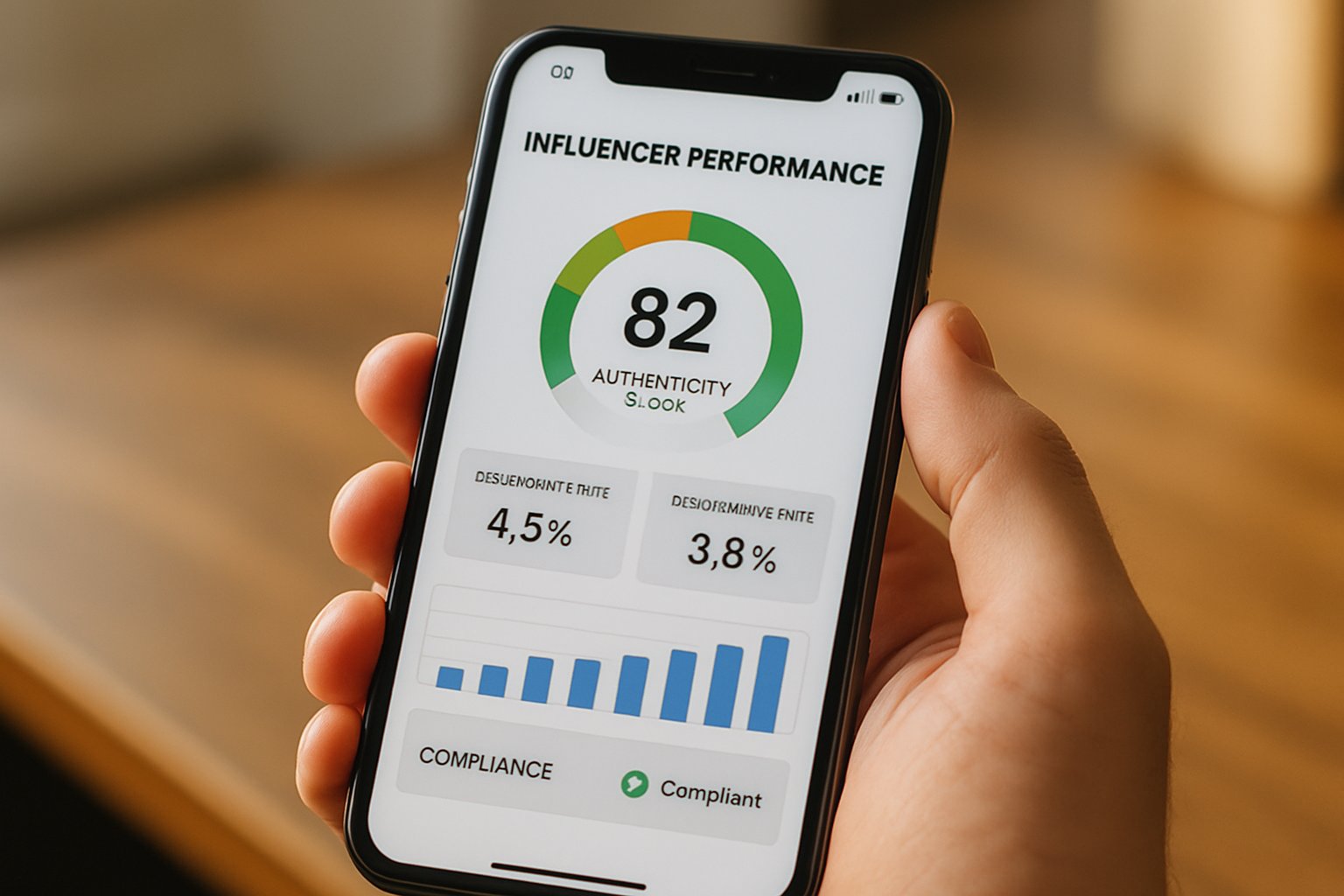
Authenticity engines ingest public profile data, engagement logs, and growth curves. Those inputs feed influencer authenticity scoring algorithms that calculate risk in milliseconds. Subsequently, machine learning models assign probability scores to each follower and interaction. High-risk nodes reduce the creator’s overall Audience Quality Score or equivalent index. Therefore, brands receive a single 0–100 number for quick comparison across large rosters.
Fake follower detection relies on metadata patterns like empty bios, extreme follow ratios, and synchronized activity spikes. Meanwhile, comment authenticity models flag repetitive phrasing often linked to engagement pods. In contrast, healthy communities show organic linguistic diversity over varied posting times.
Some vendors publish methodology overviews, yet weighting details stay proprietary for competitive reasons. Consequently, creators can view only headline numbers, not underlying probability matrices. Nevertheless, audit PDFs often list top risk drivers such as suspicious geo distribution.
Algorithm pipelines merge data science and heuristic rules to approximate audience truth. However, the real disruption emerges during contract negotiations. Next, we examine how scores reshape deal structures.
Impact On Dealmaking Processes
Procurement portals now embed minimum thresholds; creators under 70/100 often fail initial screening. Moreover, many enterprise campaigns limit participation to vendors with verified dashboards such as HypeAuditor or CreatorIQ. Consequently, smaller agencies invest in subscriptions that surface compliant talent quickly. Influencer authenticity scoring algorithms also influence payment calendars.
Brands now discount reach that algorithms label as unreliable. Therefore, a creator with 20% fraudulent followers might see fees reduced by comparable margins. Some contracts split compensation: lower upfront, with bonuses tied to clean post-campaign audits. Meanwhile, brands favor longer partnerships with high-score creators to minimize repetitive vetting costs.
Laura Dekimpe of Bekina Boots states that HypeAuditor scores guided their year-long ambassador roster. Such evidence reassures finance teams previously skeptical of influencer line items.
In short, scoring now dictates selection, pricing, and payment conditions. Consequently, both parties must adapt negotiation playbooks accordingly. Benefits and drawbacks emerge from this new discipline, as the next section details.
Brand And Creator Benefits
Chief marketing officers cite faster vetting cycles as a primary win. Furthermore, verified media kits simplify legal review and reduce fraud liability. Consequently, procurement teams can justify larger creator budgets during annual planning.
- Improved return on advertising spend through cleaner audience reach.
- Elevated trust scores during internal audits and board reporting.
- Surfacing micro-influencers with niche yet authentic communities.
Brands report that influencer authenticity scoring algorithms improved return on advertising spend by double digits. For creators, high scores translate into pricing power and recurring contracts. In contrast, older follower metrics rarely rewarded genuine engagement depth. Therefore, authentic micro talents now compete alongside celebrity names on a level field.
Benefits span speed, transparency, and equitable discovery. Nevertheless, several unresolved issues could undermine these gains. The following section examines limitations and ethical risks.
Limitations And Ethical Risks
Many algorithms remain black boxes, offering creators little recourse against disputed ratings. Moreover, error margins are rarely published, obscuring false positive rates. Consequently, livelihoods can suffer when single scores determine campaign eligibility. Influencer authenticity scoring algorithms risk replicating demographic biases present in training data.
Researchers warn that multilingual or diaspora audiences sometimes appear as suspicious geographic clusters. In contrast, bots may evade detection by mimicking diverse linguistic patterns. Therefore, human review layers remain essential, especially for underrepresented creators.
Additionally, platform API restrictions can degrade model accuracy overnight. Subsequently, brands depending on one vendor face sudden coverage gaps. Nevertheless, diversified tool stacks and contractual audit clauses can mitigate lock-in exposure.
These risks highlight the importance of balanced, transparent governance. Consequently, market players are experimenting with new safeguards. Emerging trends and forecasts illustrate where those safeguards may lead.
Emerging Trends And Forecasts
Forecasts suggest real-time APIs will soon update scores within minutes of content publication. Furthermore, creator economy AI startups are building self-serve dashboards for small businesses. Real-time fake follower detection will likely integrate directly into live commerce feeds. Consequently, even regional retailers can vet talent without agency retainers. Blockchain stamped media kits may also provide tamper-proof performance data.
Regulators are drafting guidelines that mandate disclosure of synthetic content and algorithmic decision factors. Therefore, vendors will need explainability layers to satisfy compliance auditors. Creator economy AI tools already feature downloadable transparency statements anticipating such rules.
Meanwhile, agency groups are pushing for standardized labels similar to the nutrition facts model. Influencer authenticity scoring algorithms may converge around open benchmarks within three years. Nevertheless, proprietary differentiation will persist in fraud signal libraries.
Trendlines emphasize real-time data and mandatory transparency. Consequently, professionals need updated skills to steward these changes responsibly. The final section explains relevant competencies and learning paths.
Talent Skills And Certifications
Data literacy tops the list for marketers evaluating algorithmic reports. Moreover, legal awareness ensures teams integrate scoring within compliant disclosure frameworks. Creator economy AI fluency helps bridge conversations between analytics leads and creative directors.
Professionals can enhance analytical rigor through the AI Ethical Hacker™ certification. Additionally, the program teaches penetration testing for data pipelines that feed influencer authenticity scoring algorithms. Consequently, graduates can audit fraud detection stacks for security flaws.
- Interpreting model confidence intervals and error margins.
- Drafting contractual clauses linking payments to verified data.
- Implementing fake follower detection cross-checks manually.
Ultimately, multidisciplinary expertise will separate strategic partners from transactional vendors. Therefore, forward-looking professionals should prioritise continuous learning. These capabilities ensure organisations extract maximal value while preserving influencer trust. Consequently, the ecosystem evolves toward accountable, data-centric collaboration.
Conclusion
Influencer authenticity scoring algorithms have shifted the creator economy from popularity contests to verifiable performance contracts. Brands gain speed, ROI, and governance; creators receive clear feedback on audience health. However, opacity, bias, and vendor dependence remain pressing issues requiring vigilant oversight. Therefore, combining advanced tools with skilled human judgment is essential. Professionals who master fake follower detection and creator economy AI will guide ethical growth. Meanwhile, certifications like AI Ethical Hacker™ strengthen technical credibility. Act now: audit your influencer pipeline, upskill your team, and champion transparent partnerships. Consequently, your organisation will capture authentic attention while avoiding costly missteps. Bookmark this guide and revisit emerging benchmarks to stay ahead.
Disclaimer: Some content may be AI-generated or assisted and is provided ‘as is’ for informational purposes only, without warranties of accuracy or completeness, and does not imply endorsement or affiliation.


