

AI CERTs
7 months ago
Pierre Fabre, Iktos Advance Integrated AI Drug Discovery
Partnerships between biotech innovators and mid-sized pharmas are reshaping oncology research. Consequently, Pierre Fabre Laboratories and Iktos announced a groundbreaking collaboration on 9 January 2026. The alliance focuses on Integrated AI Drug Discovery for an undisclosed cancer target. Moreover, the venture combines advanced algorithms, automated synthesis, and seasoned preclinical expertise to compress early development timelines.
Industry observers see the move as a strategic response to rising competition and soaring R&D costs. Additionally, Grand View Research values the AI drug-discovery market at roughly USD 1.5 billion in 2023, with double-digit CAGR projected through 2030. These figures underline why many stakeholders pursue similar alliances.
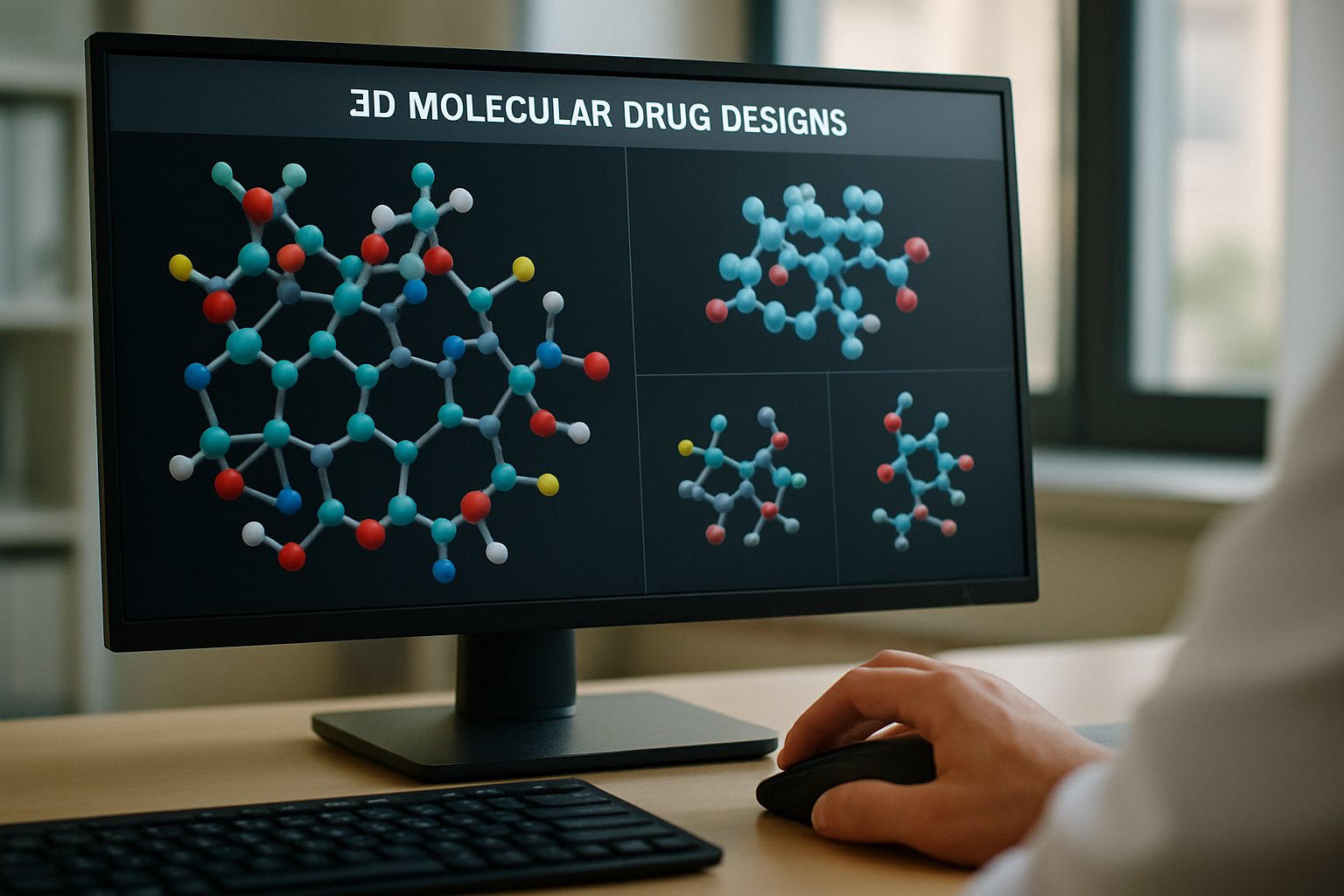
Oncology Deal Context Overview
Pierre Fabre generated €520 million in oncology sales during 2024, reinforcing its therapeutic commitment. Furthermore, its €219 million annual R&D budget positions the company to invest aggressively in novel platforms. Meanwhile, Paris-based Iktos brings more than 60 completed projects, a €15.5 million Series A, and robotics grants supporting automated chemistry.
The agreement employs an upfront payment plus milestones, although financial specifics remain confidential. Nevertheless, both sides expect faster hit-to-lead conversion by uniting digital design with wet-lab validation. Yann Gaston-Mathé, Iktos CEO, stated that the collaboration “exemplifies complementarity” between computational and experimental capabilities.
Generative Models Core Tools
Iktos offers Makya™ for de novo design and Spaya™ for retrosynthetic planning. Therefore, Pierre Fabre scientists will receive synthetically accessible molecules rather than theoretical fantasies. Such workflow integration marks a practical shift from earlier siloed approaches.
These early details frame a partnership built on shared risk and clear performance milestones. Consequently, the industry will watch closely for preclinical readouts.
Technology Stack Explained Clearly
At the heart lies a triad of Molecular Generative Models, retrosynthesis algorithms, and robotics. Makya™ employs variational autoencoders and reinforcement learning to suggest candidates optimized for potency, ADMET, and novelty. Subsequently, Spaya™ evaluates synthetic feasibility and proposes stepwise routes.
Robotic workstations then execute synthesis, closing the Design-Make-Test-Analyze loop. Moreover, assay data feed back into the models, improving subsequent design cycles. This virtuous feedback embodies Pharma AI R&D aspirations: rapid iteration with minimal human bottlenecks.
Independent reviews stress the need for experimental confirmation. Therefore, automation’s inclusion is critical. The combined platform keeps computational creativity grounded in laboratory reality. Integrated AI Drug Discovery initiatives without such feedback often stall.
Overall, the stack targets shorter cycle times and higher hit rates. These efficiencies could translate into competitive clinical timelines. However, regulators will still demand standard toxicology packages.
Market Growth Drivers Today
Several macro forces support the deal. Firstly, oncology remains the largest therapeutic segment for venture funding and licensing. Secondly, biologic modalities dominate headlines, yet small-molecule programs still represent significant sales. Consequently, companies seek differentiated chemistry to complement biologics.
Thirdly, digital transformation budgets continue rising across Pharma AI R&D. Moreover, talent shortages in computational chemistry push firms toward external partners. Integrated AI Drug Discovery collaborations thus offer immediate scale without heavy hiring.
- Grand View Research projects AI drug-discovery CAGR above 30% through 2030.
- Iktos secured a €2.5 million EIC grant in 2025 for robotics expansion.
- Pierre Fabre aims to build an “AI-powered R&D engine,” per internal statements.
These indicators suggest sustained capital flow into the sector. Consequently, partnerships similar to Pierre Fabre-Iktos will likely proliferate.
Market momentum explains investor enthusiasm. Nevertheless, tangible pipeline progress will remain the ultimate yardstick.
Benefits And Strategic Rationale
The collaboration promises speed, cost control, and broader chemical exploration. Furthermore, Molecular Generative Models can traverse chemical space beyond traditional libraries. Therefore, unique scaffolds may emerge against resistant cancer mechanisms.
Automated synthesis reduces manual labor and mitigates reproducibility issues. Additionally, computational prioritization may cut attrition by filtering molecules with poor ADMET profiles. Integrated AI Drug Discovery efforts thus aim to de-risk preclinical investment.
Pierre Fabre also gains internal capability uplift. Knowledge transfer from Iktos could seed future independent projects. Meanwhile, Iktos secures validation with a commercial-stage partner, enhancing its SaaS credibility within Pharma AI R&D circles.
Professionals can enhance their expertise with the AI Network Security™ certification. Such credentials support robust data stewardship, an essential pillar for AI collaborations.
Collectively, these benefits justify the alliance. However, execution quality will decide real-world success.
Risks And Key Limitations
Despite optimism, caution endures. Independent analyses note that Molecular Generative Models remain data-dependent. Consequently, biased or sparse datasets can skew predictions. Moreover, regulatory agencies grow wary of “black-box” evidence.
Another concern involves intellectual property. The press release omits ownership details for molecules emerging from the project. Therefore, downstream negotiation may influence commercialization speed. Integrated AI Drug Discovery deals often face complex IP frameworks.
Validation bottlenecks persist as well. Automated labs accelerate synthesis, yet animal studies still require time. Additionally, safety liabilities can surface late, negating early gains. In contrast, transparency and rigorous peer review can mitigate these pitfalls.
These caveats highlight potential obstacles. Nevertheless, clear governance and open metrics could foster trust.
Future Milestones Watchlist Ahead
Stakeholders should monitor several near-term indicators. Firstly, look for public disclosure of the oncology target class. Secondly, anticipate timeline guidance for lead nomination. Thirdly, watch for peer-reviewed data validating the design loop.
Moreover, milestone payments may appear in Pierre Fabre financial statements. Consequently, analysts can infer project progress. Integrated AI Drug Discovery teams must demonstrate that design cycles translate into measurable preclinical success.
Iktos also plans to scale its robotics facility during 2026. Additionally, future licensing of Makya™ or Spaya™ to other partners will test platform scalability within broader Pharma AI R&D.
Upcoming milestones will either confirm efficiency gains or expose integration gaps. Therefore, regular progress updates remain essential.
The outlined watchlist sets clear expectations. Subsequently, transparent reporting can strengthen stakeholder confidence.
Disclaimer: Some content may be AI-generated or assisted and is provided ‘as is’ for informational purposes only, without warranties of accuracy or completeness, and does not imply endorsement or affiliation.


